Integrated mine-water management treats every water source, use and discharge on a mine as one connected system. Pamicor applies this approach at AngloGold Ashanti Ghana’s Obuasi Mine, where it treats more than 3.5 million m³ of mine-affected water and produces more than 2.0 million m³ of potable water each year.
Water keeps a mine running. It feeds mineral processing, dust suppression, underground operations and drinking water for workers and communities. Mining also produces complex wastewater that can carry suspended solids, cyanide, metals, arsenic and dissolved salts.
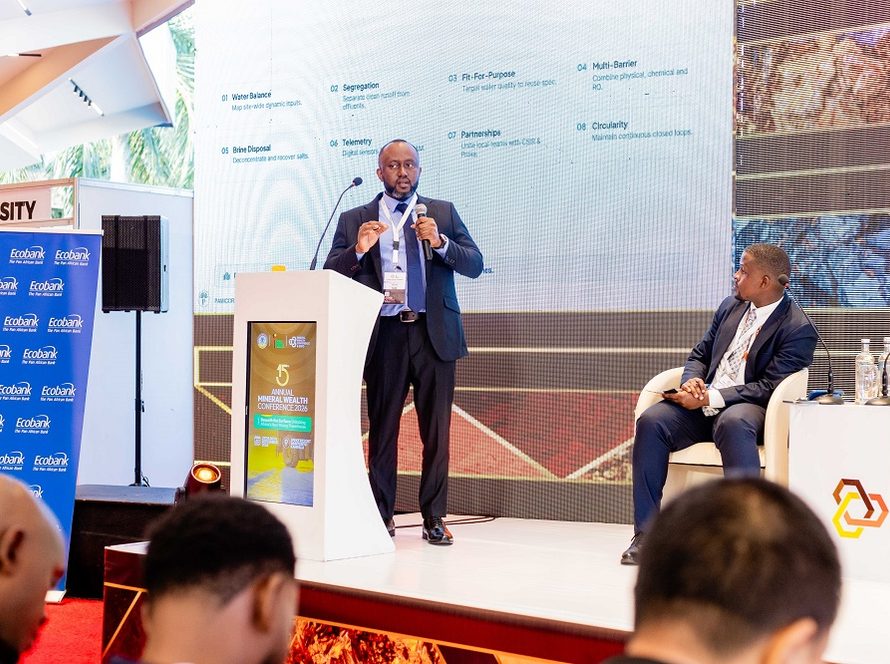
With rising demand, climate variability and stricter environmental rules, how a mine manages water now shapes its costs, its licence to operate and its long-term future. This article shares the lessons Pamicor presented at the 15th Annual Mineral Wealth Conference in Kampala, drawn from years of operating water systems at Obuasi.
What is integrated mine-water management?
Integrated mine-water management is an approach that connects water sourcing, dewatering, treatment, storage, process use, recycling, residuals management and discharge into a single site-wide system. Each part affects the others, so decisions are made with the whole water balance in view.
The traditional model is linear: abstract, use, treat, discharge. The integrated model aims for circularity, keeping water in the operational cycle for as long as practical.
Why is water management so hard on a mine?
Mine water is difficult because both its volume and its quality keep changing. The main pressures are:
- Variable supply. Rainfall, runoff and groundwater inflows rise and fall with the seasons.
- Complex chemistry. Gold processing streams can contain cyanide, thiocyanate, arsenic and heavy metals.
- High dissolved salts. High levels of total dissolved solids limit direct reuse and call for advanced treatment.
- Shifting loads. Changes in ore, production rates and process chemistry change what reaches the treatment plant.
What does this look like at Obuasi Mine?
At Obuasi, a deep underground operation with more than 120 years of history, groundwater seeps into the workings and is pumped to the surface. This water is a useful internal source, but its high dissolved solids content means it must be treated before reuse or discharge.
The region’s tropical, high-rainfall climate adds another layer. In heavy rains the site can run a positive water balance, where more water is generated than operations need. The system has to absorb that surplus safely.
Pamicor manages an integrated treatment system at Obuasi that includes:
- 4 industrial wastewater treatment plants
- 2 potable water treatment plants serving the mine and surrounding communities
- More than 3.5 million m³ of mine-affected water treated a year
- More than 2.0 million m³ of potable water produced a year
What are the 8 principles of integrated mine-water management?
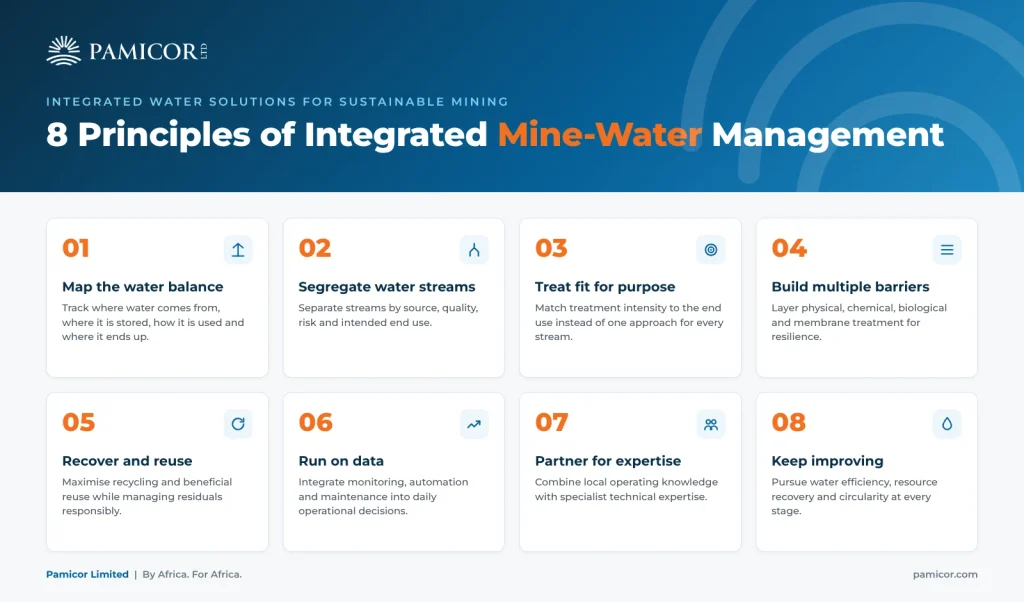
Based on its operating experience, Pamicor recommends building a mine-water strategy on eight principles:
- Understand the complete site-wide water balance. Know where water comes from, where it is stored, how it is used and where it ends up.
- Segregate water streams by source, quality, risk and intended use.
- Apply fit-for-purpose treatment. Match treatment intensity to the end use instead of treating every stream the same way.
- Use multi-barrier treatment. Combine coagulation, flocculation, filtration, cyanide treatment, biological processes and reverse osmosis so no single process carries all the risk.
- Maximise recovery, recycling and reuse while managing residuals responsibly.
- Integrate monitoring, automation and maintenance with day-to-day operational decisions.
- Build partnerships that combine local operating knowledge with specialist technical expertise.
- Keep evaluating opportunities for water efficiency, resource recovery and circularity.
Why does treatment reliability matter more than capacity?
A plant with plenty of installed capacity is still a risk if it cannot perform steadily when conditions change. What counts is available capacity on any given day.
Reliability comes from preventive maintenance, process monitoring, chemical management, spare parts, instrumentation and, above all, competent operators working to clear procedures. For this reason, spending on operations and maintenance is an investment in environmental performance, production reliability and asset life.
How should mines handle reverse osmosis brine?
Reverse osmosis produces high-quality water, but higher recovery also concentrates salts in the leftover brine. Optimising reverse osmosis therefore means weighing clean water output against fouling, scaling, energy use, cleaning needs and how the concentrate will be managed.
Pamicor and Proxa Water have run pilot-scale work at Obuasi on deconcentrating high-sulphate reverse osmosis reject. The aim is to recover more water, shrink residual volumes and explore turning concentrated streams into recoverable mineral products.
What are the business and ESG benefits?
Integrated water management delivers value on both the operational and the sustainability side:
- Lower freshwater dependence and better water security for processing
- Fewer production disruptions from shortages, off-spec water or plant downtime
- Lower operating costs through optimised use of chemicals, energy and existing assets
- Better control of contaminants and consistent discharge compliance
- Stronger ESG performance through credible water stewardship and reduced regulatory risk
Where is mine-water management heading?
The direction is circular water management. Future systems will rely more on real-time monitoring, automation and data analytics to spot problems early. Brines and concentrates will increasingly be seen as a source of recoverable products.
Technology alone will not get mines there. Skilled people, disciplined operations, strong maintenance and good environmental governance matter just as much. Pamicor’s work with CSIR Ghana and Proxa Water shows how local operating experience and specialist expertise can produce solutions that work under real mining conditions.
Work with Pamicor
Pamicor Limited is a wholly Ghanaian-owned mining, engineering and construction services company founded in 1993. Our Water Treatment team designs, operates and optimises mine-water systems from raw water to process reuse and compliant discharge.
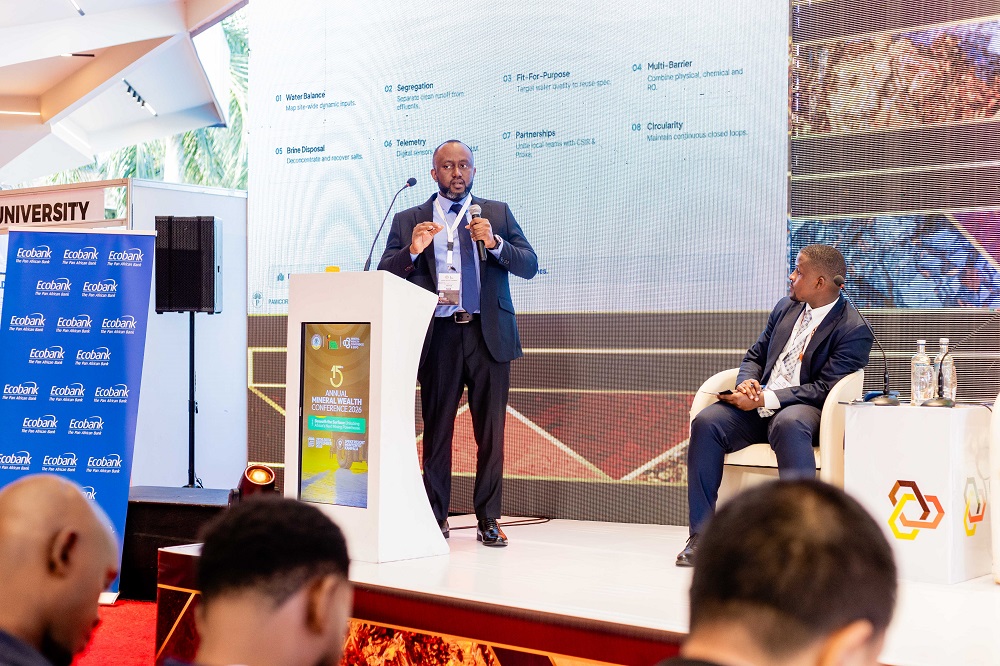
Talk to our water treatment team about your operation, explore our water treatment services, or read about our presentation at the Mineral Wealth Conference 2026.
Frequently Asked Questions
What is integrated mine-water management?
It is an approach that manages all water on a mine, from sourcing and dewatering to treatment, storage, reuse and discharge, as one connected system, with decisions based on the full site-wide water balance.
What is circular water management in mining?
Circular water management keeps water in the operational cycle for as long as practical by recovering and reusing treated water, cutting freshwater abstraction and recovering value from residual streams.
What is multi-barrier treatment for mine water?
Multi-barrier treatment combines several processes, such as coagulation, flocculation, filtration, cyanide treatment, biological treatment and reverse osmosis, so that no single process carries all the risk when water quality changes.
Why is reverse osmosis brine a challenge for mines?
As reverse osmosis recovers more clean water, salts concentrate in the leftover brine. That brine must be managed, treated or recovered, so water recovery and concentrate management have to be planned together.
How much water does Pamicor treat at Obuasi Mine?
Pamicor’s integrated system at AngloGold Ashanti Ghana’s Obuasi Mine treats more than 3.5 million m³ of mine-affected water and produces more than 2.0 million m³ of potable water every year.
What are the benefits of integrated water management for mines?
Lower freshwater dependence, fewer production disruptions, lower operating costs, better contaminant control and stronger ESG performance through credible water stewardship.